



 COPIED
iPhone Duo: Apple’s first folding phone goes on sale, if you can find one
Apple’s first folding phone, the iPhone Duo, goes on sale on Friday 23 October in more than 70 countries and regions, ending years of speculation about whether the company would ever follow Samsung and Google into foldables.
Getting hold of one may prove harder than paying for it. Pre-orders opened on 16 October and the phone sold out in under an hour, with delivery estimates on Apple’s website quickly slipping into December and, in some markets including the UK, into late January.
The Duo starts at $1,999 in the US, which puts it $100 above Samsung’s latest Galaxy Z Fold 8 and firmly in luxury territory. Local prices vary by country, and Apple’s regional websites list the exact figure for each market.
What is the iPhone Duo?
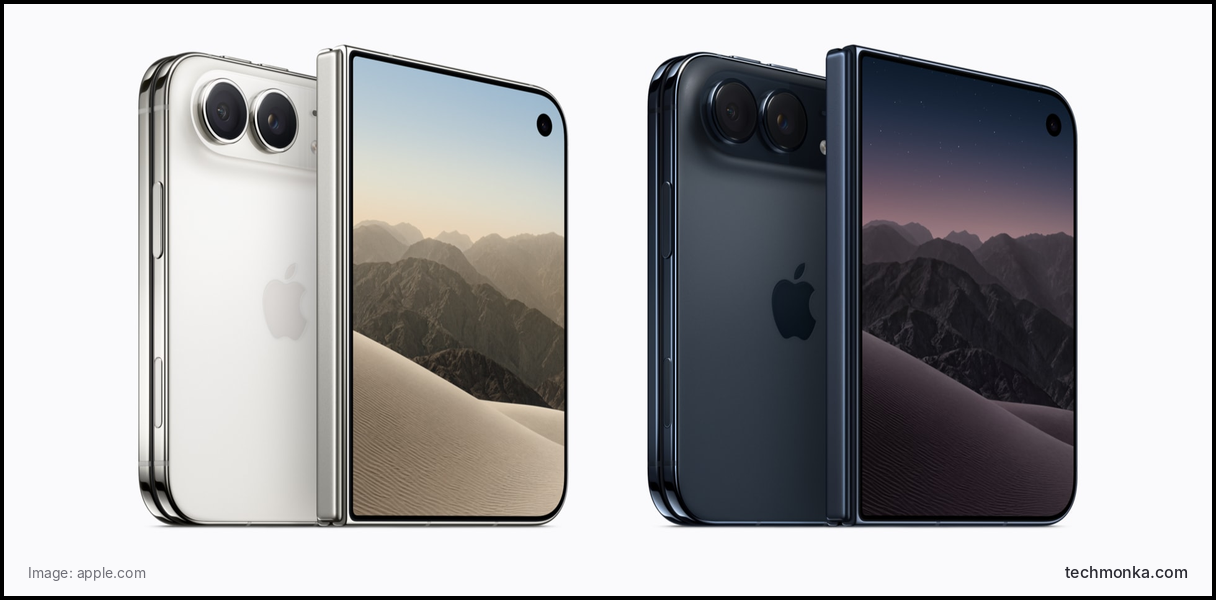
The Duo is a book-style foldable. Closed, it is a compact phone with a 5.4-inch screen on the front, and it opens like a book to reveal a 7.6-inch display inside, which Apple says is 50% larger than the screen on the iPhone 18 Pro Max. Apple has given both screens the same proportions so that content can move from one to the other without being stretched, and opened flat it is the thinnest iPhone the company has made.
When the phone was unveiled in September, Apple chief executive John Ternus called it “the most transformational change to iPhone since the original”.
Specs and key features
Inside is the A20 Pro, the same chip used in the iPhone 18 Pro, built on a 2-nanometre process and kept cool by a custom vapour chamber. Storage starts at 256GB and goes up to 2TB, and the phone comes in two colours called star white and night sky.
The hinge is made of more than 100 parts and is designed to support the middle of the inner screen so that it lies flat when open, while magnets hold the two halves shut. The body is grade 5 titanium and the phone carries an IP68 rating for water and dust resistance.
Power comes from two batteries, one in each half. Apple claims up to 24 hours of mixed use and says the phone can reach 50% charge in about 20 minutes with a fast wired charger.
On the back there are two 48-megapixel cameras, a main camera and an ultra-wide. There is no dedicated telephoto lens, so the 2x zoom is taken from the main sensor. A selfie camera sits on the outer screen and a second camera is hidden beneath the inner display for video calls.
Long-time iPhone owners will notice two bigger changes. The Duo drops Face ID in favour of a Touch ID fingerprint sensor in the side button, and it uses eSIM only in every country, so there is no slot for a physical SIM card.
The phone runs iOS 27.1, which brings Split View to the iPhone for the first time and lets you run two apps side by side on the big screen. Support for the Apple Pencil is due later this year. Apple’s new Siri features launch in English first, with more languages to follow, and will not be available in the European Union at first.
What do the reviews say?
The first reviews were published this week and most agree that Apple has done an impressive job with the crease, the line where the inner screen folds. A matte nano-texture coating hides it in everyday use, although PCMag found it could still be seen when the screen was off and felt with a finger.
Weight is the most common complaint. At 254g the Duo is five grams heavier than the iPhone 18 Pro Max, and Gizmodo’s reviewer said it made their trouser pocket sag noticeably. Others, including 9to5Mac, found it comfortable to carry because of its shorter and wider shape.
Battery results varied from test to test. PCMag recorded 18 hours and 15 minutes of video streaming, while Tom’s Guide got 13 hours and 20 minutes in its web browsing test, more than three hours longer than the Galaxy Z Fold 8 but well short of the iPhone 18 Pro Max. The Verge was the harshest critic, calling the Duo “one of Apple’s messiest first-generation products in a long time” and saying it did not seem ready to last a full day of heavy use and could get hot.
Several reviewers also pointed out that many third-party apps have not yet been updated for the wider inner screen and show black bars at the edges, while some games only fill part of the display. Wired suggested that people who are not in a hurry may want to wait for a second-generation model, though Tom’s Guide called it the best-designed foldable yet.
Why is it so hard to buy?
The short answer is supply. Reports from Apple’s supply chain over the summer suggested that its partners were struggling to produce the folding screens and hinges in large numbers, and output was said to be running at only a few hundred units a day in late August.
Bloomberg’s Mark Gurman described the pre-order launch as an “absolute disaster” and warned that customers who missed the first few minutes could face a wait of more than three months. He argued that Apple knew stock would be tight but went ahead to get sales moving at the start of its new financial year.
There are some signs that things are improving. According to Forbes, some buyers in Japan who had been given December delivery dates were told over the weekend that their phones would now arrive on launch day, and mobile networks are still promoting the Duo heavily, which suggests they have stock of their own. Anyone hoping to walk into a shop on Friday should check in-store pickup on Apple’s website first, because stock is likely to be limited. A further 28 countries and regions are due to get the phone on 30 October.
How does it compare with Samsung’s Galaxy Z Fold 8?
Apple is a latecomer. Samsung has been selling folding phones since 2019 and launched its Galaxy Z Fold 8 and Fold 8 Ultra in July, with the standard Fold 8 starting at $1,899 in the US.
Samsung’s phone is the lighter of the two at 201g, which the company says makes it the lightest foldable in the world, and the Fold 8 Ultra offers a bigger 8-inch inner screen and a 200-megapixel main camera. Apple’s advantages are its software, its tight links with other Apple devices and, according to early reviews, a less visible crease. PCMag found the Duo faster than the Fold 8 in its tests, while Tom’s Guide recorded longer battery life.
CNN, which tried the phone at Apple’s launch event, described the Duo as the biggest change to the iPhone in its history, and its arrival gives the foldable market its biggest name yet.
Should you buy one?
If you want the newest thing from Apple, can afford the price and are happy to live with a heavier phone, reviewers broadly agree that the Duo is a well-made first attempt with one of the best folding screens on the market.
For most people, though, there is little reason to rush. Many apps still need updating for the new screen, stock is scarce, and first-generation Apple products usually improve quickly in their second year. Waiting a few months will also make it easier to find one without a long delay.
Frequently asked questions
When does the iPhone Duo come out?
It goes on sale on Friday 23 October 2026 in more than 70 countries and regions, including the US, UK, Canada, Australia, Germany, France, India and Japan. A further 28 countries and regions follow on 30 October.
How much does the iPhone Duo cost?
It starts at $1,999 in the US for the 256GB model. Prices in other countries vary, and Apple also offers 512GB, 1TB and 2TB versions.
Does the iPhone Duo have Face ID?
No. It uses Touch ID, with the fingerprint sensor built into the side button. You can also unlock it with an Apple Watch.
Is the iPhone Duo waterproof?
It is rated IP68, which means it is protected against dust and can survive being splashed or briefly dropped in water.
Can I use a physical SIM card in the iPhone Duo?
No. The Duo is eSIM only in every country where it is sold, so your mobile network will need to support eSIM.
Does the crease show on the iPhone Duo?
Reviewers say it is hard to spot in normal use thanks to a matte coating on the screen, but it can still be seen at some angles and felt with a finger.

Spotted an error? Tell us. TechMonka is editorially independent; no company mentioned paid for or reviewed this story.


Comments (0)